Why Most Vitamin C Serums Oxidize Before You Finish the Bottle
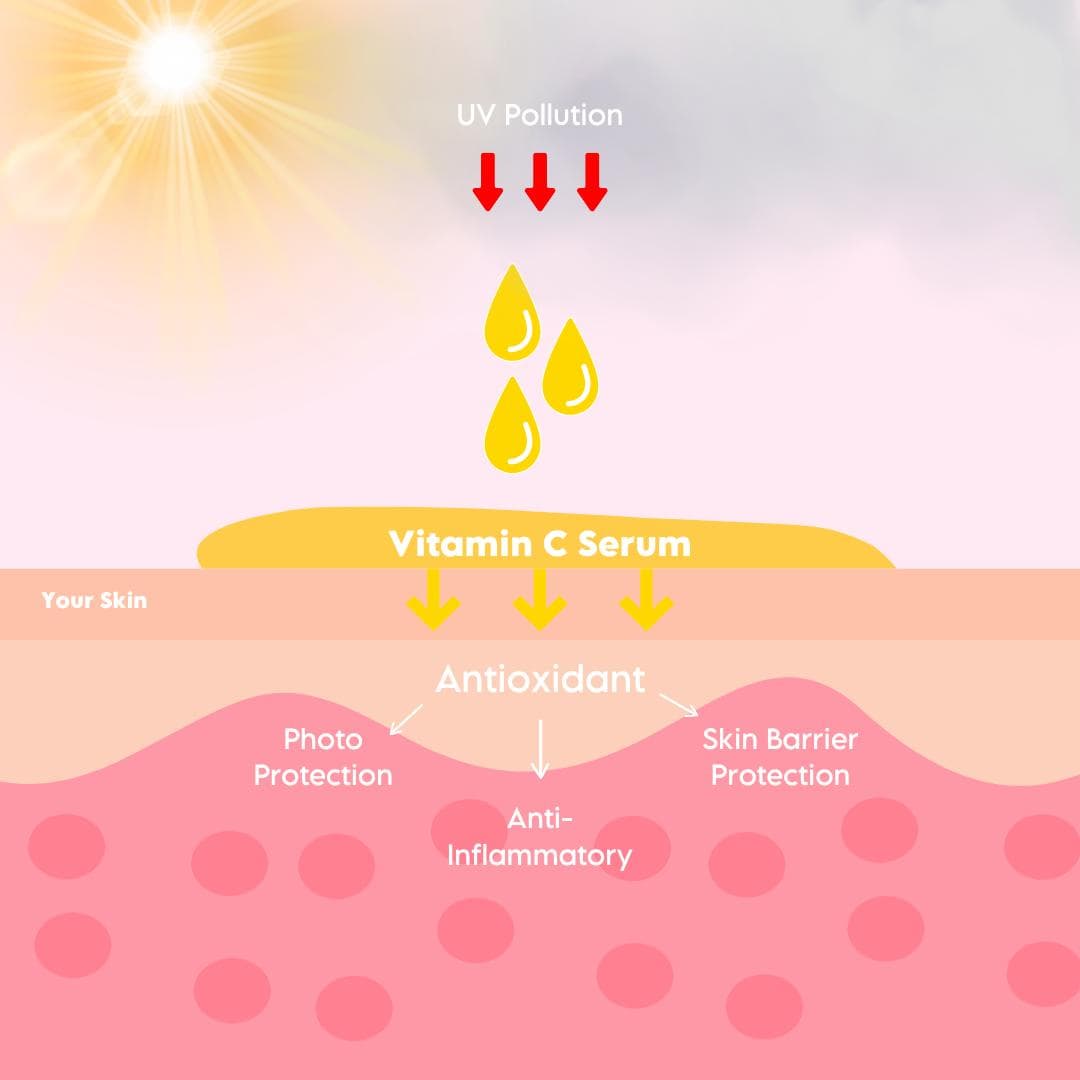
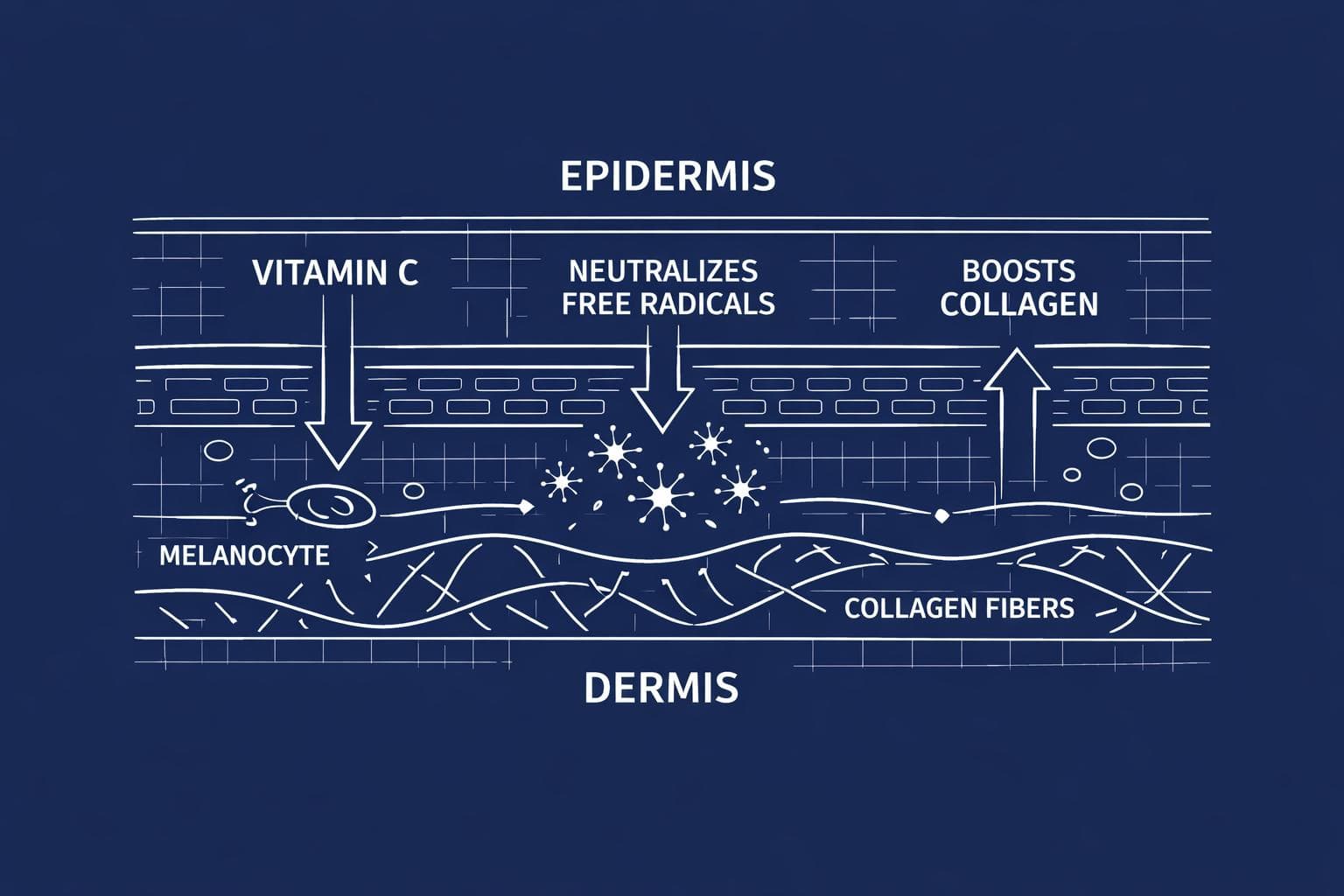
L-ascorbic acid — the gold-standard, most-studied form of vitamin C — is also one of the least stable actives in skincare. Exposed to light, air, or the wrong pH, it oxidizes into erythrulose, a compound with no meaningful antioxidant benefit and a telltale yellow-orange tint.
That's the serum you've watched turn from clear to amber in your bathroom cabinet — and why it's no longer doing much for your skin by the time it changes color.
Three variables determine shelf stability: pH (L-ascorbic acid needs a low pH, below 3.5, to stay active), packaging (opaque, airless pump bottles outperform clear jars dramatically), and co-antioxidants (ferulic acid and vitamin E measurably extend potency by stabilizing the vitamin C molecule itself).
We test every batch at 3, 6, and 12 months under accelerated aging conditions before a formula ships — which is why our Vitamin C Brightening Serum carries a 12-month open-jar guarantee on potency, not just a expiration date.